
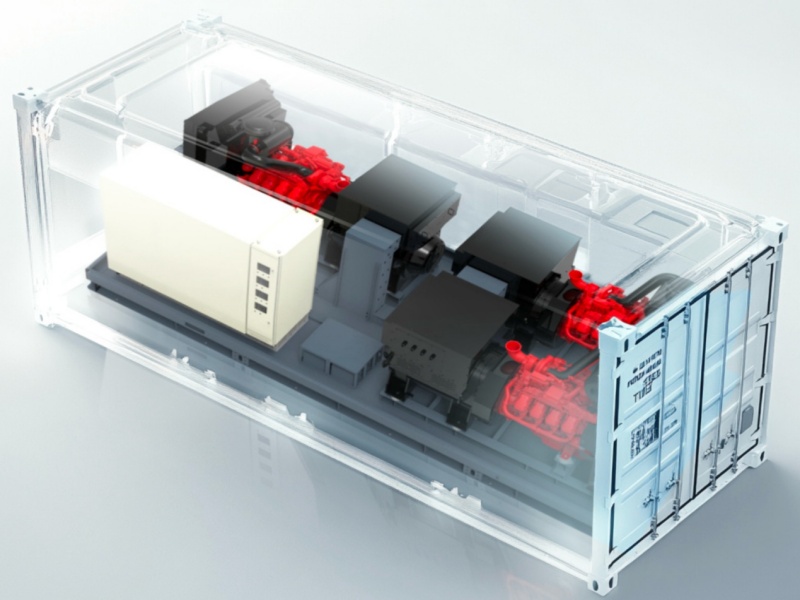
A 100-4000KVA generator set provides scalable power density from 80kW to 3200kW at 0.8 power factor, integrating with ATS systems that switch in under 10 seconds to maintain Tier III and Tier IV uptime standards. These units utilize electronic governors to manage frequency within 0.25% of nominal output, sustaining operations for 99.999% reliability as mandated by the Uptime Institute for enterprise data centers.
Reliability in modern data centers depends on the ability of a 100-4000KVA generator set to respond to sudden load shifts within milliseconds. When grid power drops, the automatic transfer switch sends a signal to the engine control module to initiate cranking.
During 2024 standardized load-step tests, high-performance engines demonstrated a frequency recovery time of less than 3 seconds when subjected to a 60% block load increase.
This rapid response prevents voltage dips from triggering server power supply units to shut down or restart prematurely. Stability remains the primary goal when IT racks consume up to 40kW per cabinet in high-density configurations.
Voltage regulation systems maintain output within a 1% tolerance range even when hardware power supplies experience non-linear harmonic loading. These fluctuations occur because modern server PSUs utilize active power factor correction circuits.
| Feature | Specification |
| Voltage Regulation | $\pm$ 0.5% - 1.0% |
| Frequency Stability | $\pm$ 0.25% |
| Transient Response | < 3 Seconds |
| Fuel Autonomy | 24 - 48 Hours |
Engineers calculate fuel storage based on a 75% load profile to ensure 24 hours of continuous operation without refueling. A 2000KVA unit typically consumes approximately 400 liters of diesel per hour at this load density.
Standard industry protocols require secondary fuel containment systems capable of holding 110% of the main tank capacity to satisfy international environmental safety codes.
This containment design prevents ground contamination in the event of tank corrosion or fitting leaks over a 20-year service lifespan. Cooling systems are sized to handle ambient temperatures up to 50°C, ensuring that airflow remains sufficient for radiator heat rejection.
Maintenance schedules follow strict intervals, with oil changes performed every 500 operating hours to prevent sludge buildup in the engine crankcase. Data centers often utilize N+1 configurations where an extra generator sits in standby for every group of active units.
Analysis of field data from 2023 shows that N+1 redundancy reduces the probability of total power failure to less than 0.0001% per annum.
Synchronizing these units requires digital paralleling controllers that match phase, frequency, and voltage before closing the breaker to the common bus. This process prevents electrical surges from back-feeding into the facility distribution panels.
Exhaust gas treatment systems utilize Selective Catalytic Reduction to meet Tier 4 final emission standards for stationary engines. These systems inject urea into the exhaust stream to reduce nitrogen oxide emissions by over 90% compared to older engine designs.
Periodic load bank testing once per month ensures that the engine internals stay clean and that the cooling system operates correctly under full load conditions.
These monthly tests prevent "wet stacking," a condition where unburned fuel accumulates in the exhaust system due to long-term light-load operation. Load banks provide resistive and reactive loads that simulate the actual server demand of the data center.
Remote monitoring systems connect via Modbus or SNMP protocols to the data center infrastructure management software. Operators track real-time metrics such as coolant temperature, oil pressure, and battery voltage on a centralized dashboard.
| Parameter | Normal Range |
| Coolant Temperature | 75°C - 95°C |
| Oil Pressure | 350 - 550 kPa |
| Start Battery | 24V - 27V |
Engineers analyze these logs to schedule part replacements, such as air filters or fuel injectors, before they impact engine performance. Predictive analytics platforms now use historical data from millions of engine hours to estimate the remaining useful life of components.
Data centers located in regions with frequent grid outages often install multiple units to form a microgrid. These systems share the load proportionally, ensuring no single engine runs at an inefficient low-load state.
Implementing automated load shedding allows the facility to prioritize power for core computing clusters if multiple generators fail during an extended outage.
This tiered approach maintains critical uptime for database processing while scaling back power for cooling fans or peripheral office lighting. Infrastructure design focuses on physical separation of fuel lines and electrical cabling to mitigate the impact of localized fires.